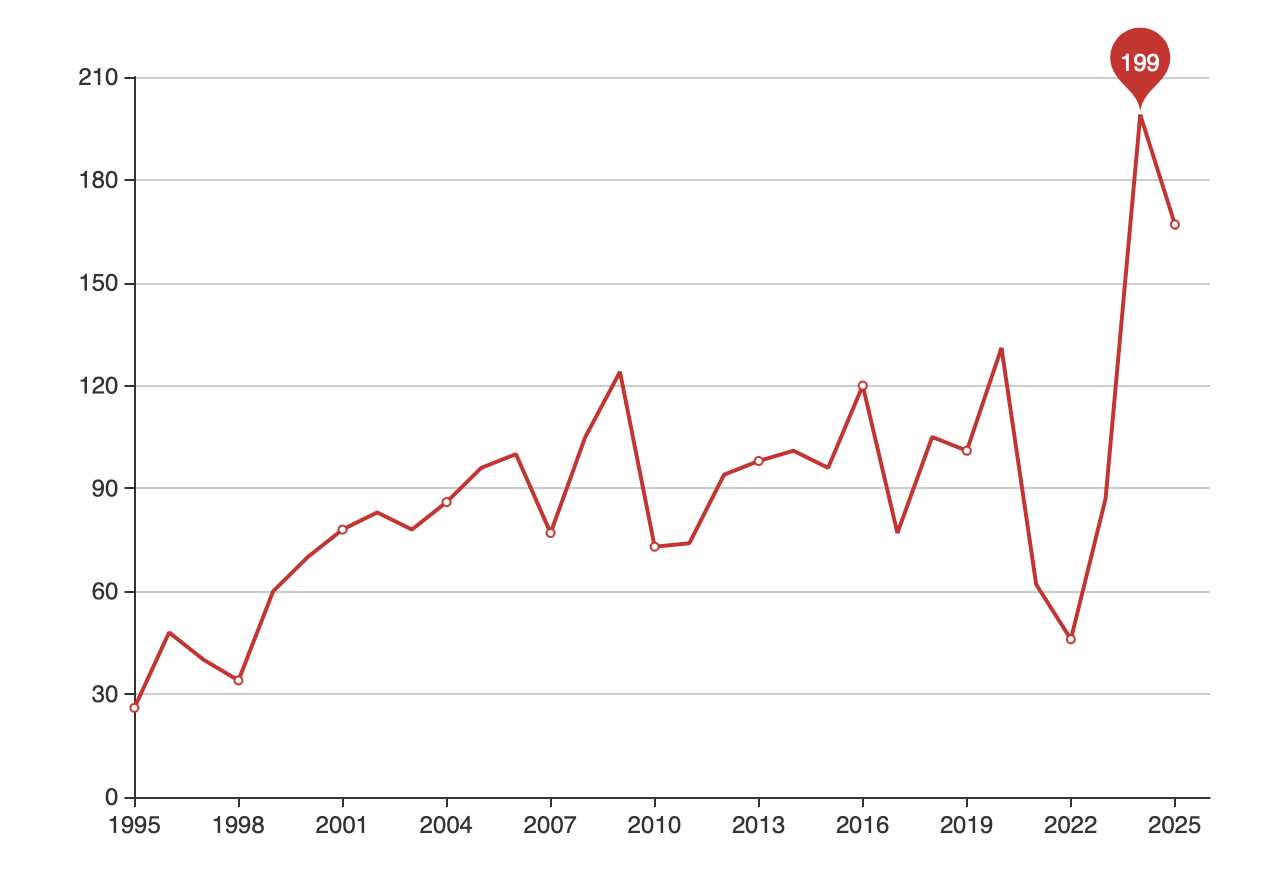
Official data reveals that the 2024–2025 period marked a historic peak in global trade remedy actions targeting Chinese exports, reflecting an unprecedented level of international scrutiny. At the same time, a steady decline in China-initiated investigations challenges the prevailing perception that Beijing typically responds to foreign trade remedies with its own, suggesting a more selective approach to trade remedy usage by China.
Data from the Chinese government's Trade Remedy Information Center (link in Chinese) shows that 2024 set a historic benchmark with 199 new investigations launched against Chinese products, the highest annual total on record.
While this figure declined to 167 in 2025, the number of new cases remained significantly above pre-2024 levels, signaling a new normal of heightened global trade friction.
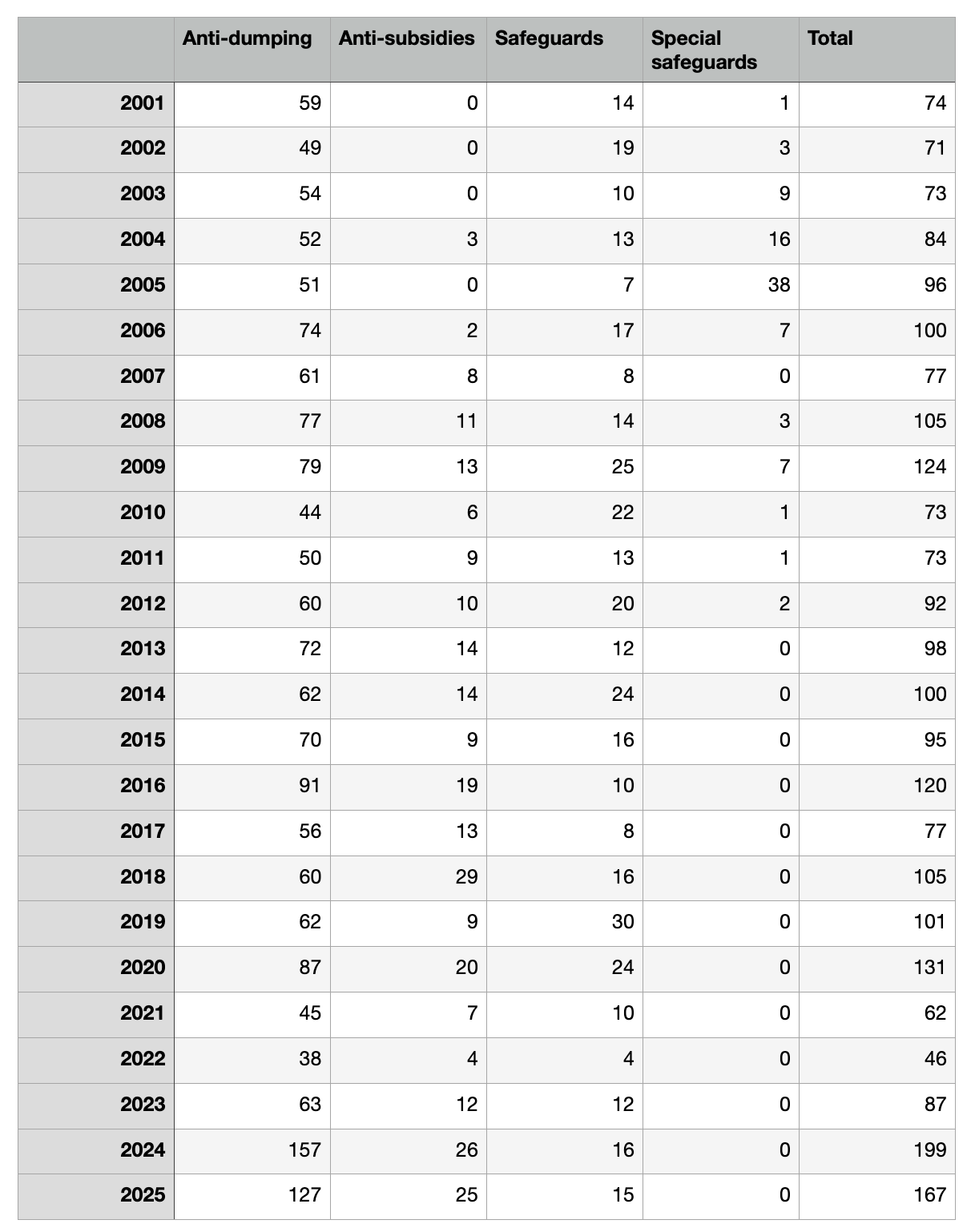
A breakdown of the investigations shows that anti-dumping investigations remain the dominant tools for trading partners, followed by countervailing duty and safeguard measures. Most cases concentrate on heavy industries such as chemicals, metal, and steel.
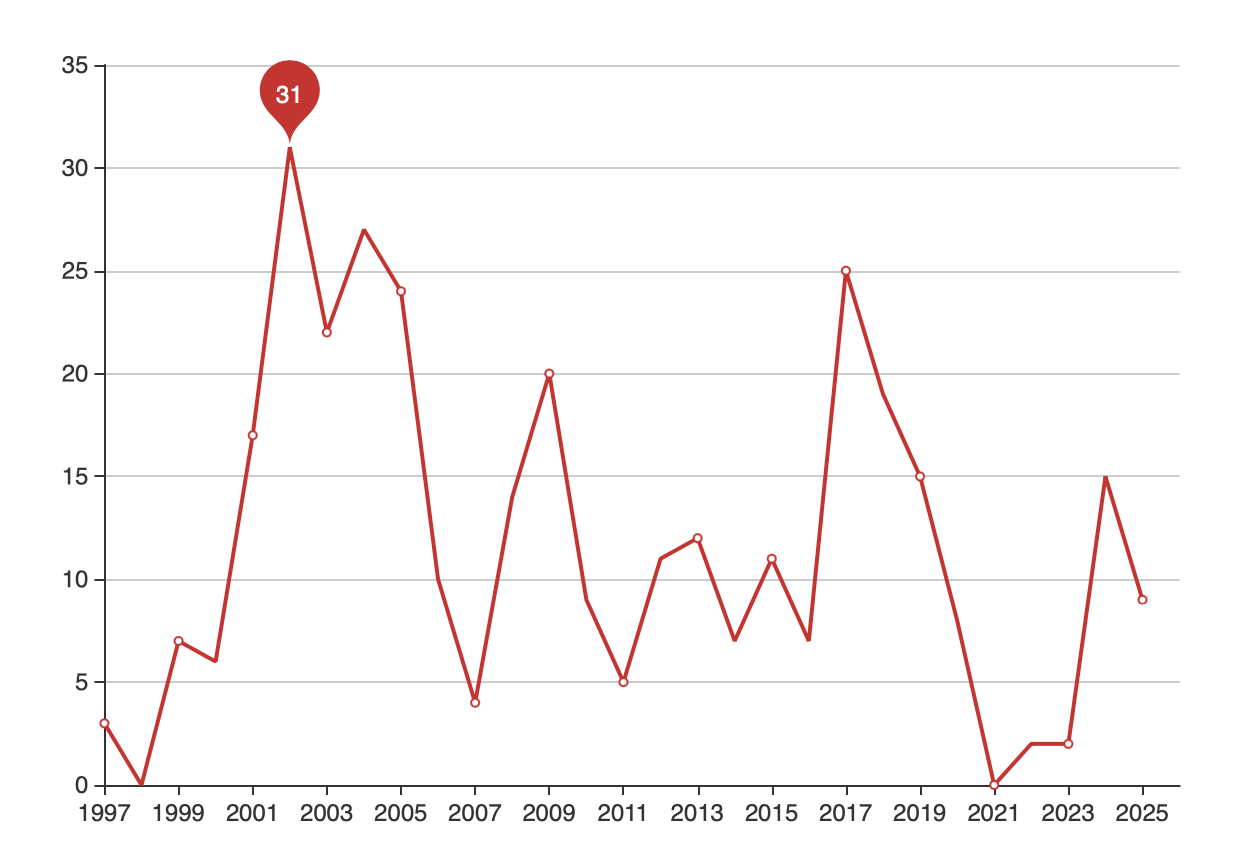
Notably, China’s own recourse to trade remedies is following an opposite trajectory. Chinese investigations into foreign imports peaked in 2002 and have trended lower ever since. In 2024, China launched 15 trade remedy cases, and the number further dropped to 9 last year.
This widening gap between China’s role as a primary respondent in global trade litigation and its diminishing activity as a complainant challenges the prevailing perception that Beijing often counters foreign trade remedies with reciprocal measures. While China has deployed trade remedy tools in several high-profile instances, its overall utilization remains statistically low.
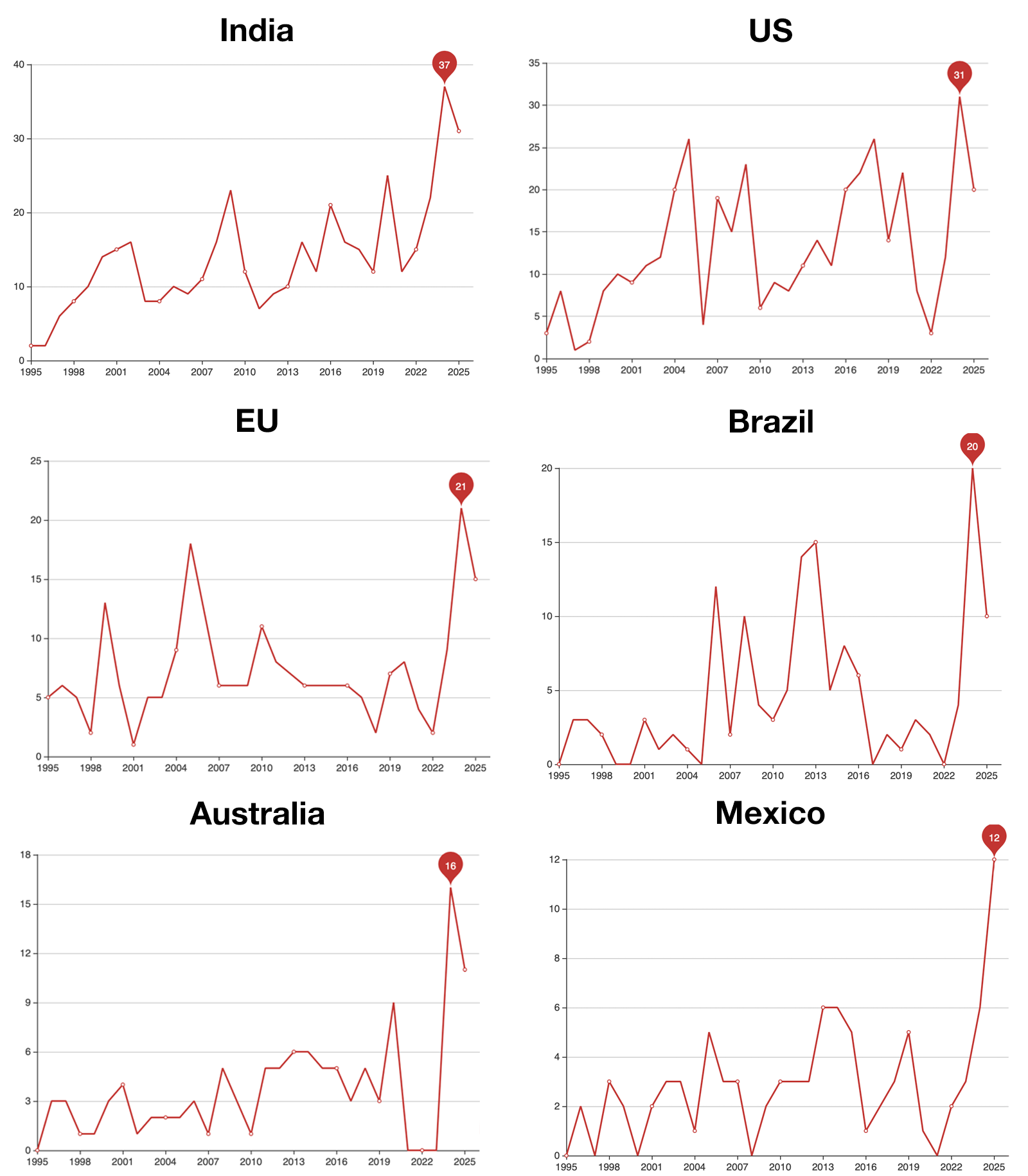
Country-by-country data for 2024 and 2025 shows India as the biggest user of trade remedies against Chinese goods, launching 68 new investigations. The U.S. ranked second with 51 cases, followed by the EU with 36 cases, Brazil with 30 cases, and Australia with 27 cases.
The top five economies, India, the U.S., the EU, Brazil and Australia, all hit a record high for trade remedy investigations in 2024, with a moderate decline in 2025 in some nations.
An outlier in 2025 is Mexico, which dramatically intensified its trade defense tools. Mexico saw a 100% year-over-year increase in its caseload against Chinese goods last year, marking its emergence as a more assertive player in global trade enforcement, likely influenced by U.S. policies and pressure.